
Your Professional Steel Pipe and Fitting Manufacturer
Taiyuan Haizhuo Industrial Trade Co.,Ltd. (THIT) is located in Taiyuan City, Shanxi Province, China. Our Portfolio including three parts as follows: Piping Products covers the pipes of different materials used for transmission line, distribution line, household connection and service line. Building Materials covers materials of various usage for building works. Vehicles, Machineries and Instruments covers the tools used to mobilize, construct, install, commission and test the material and works in project.
Why Choose Us
01/
Rich Experience
THIT More Than 10 Years Experience in the sector of water and wastewater sector. We do not only provide goods required but also engineering, design and aftersales services.
02/
One Stop Supply
THIT is specializing in one stop supply with a full range of products used in the construction, expansion, maintenance and repair works for water supply, wastewater treatment, irrigation and fire fighting system.
03/
One Stop Supply
THIT is specializing in one stop supply with a full range of products used in the construction, expansion, maintenance and repair works for water supply, wastewater treatment, irrigation and fire fighting system.
04/
24H Online Service
Quick Response. We promise to deliver a feedback within 24 working hours after the request from customer.
-

S.S Welded Pipe
Stainless Steel is a name given to a group of steel alloys that contain more than 10.5% Chromium. Chromium has a high affinity for oxygen and forms a stable oxide film on the surface of stainless Add to Inquiry -
S.S Seamless Pipe
Stainless Steel Seamless Pipe is made of a single piece of stainless steel as opposed to a welded pipe. As its name suggests, seamless steel pipe does not have a seam or a welded joint.. Stainless Add to Inquiry -
Carbon Steel Welded Pipe
Carbon Steel Welded Pipes (Tubes), are produced by forming a hollow profile from coil, sheet or plate and welding adjacent edge together, and it could be further processed, either hot or cold into Add to Inquiry -
Carbon Steel Seamless Pipe
Carbon Steel Seamless Pipe (Tube), namely SMLS Steel Pipe has, as its name implies, no longitudinal weld seam. It is, in essence, one solid homogeneous piece of steel. A solid billet is simply heated Add to Inquiry -
Butt Weld Steel Fitting
Butt Weld Steel Fitting is a weldable steel pipe fitting that allows for change of direction of flow, to branch off, reduce pipe size or attach auxiliary equipment, and it is generally used in WOG Add to Inquiry -
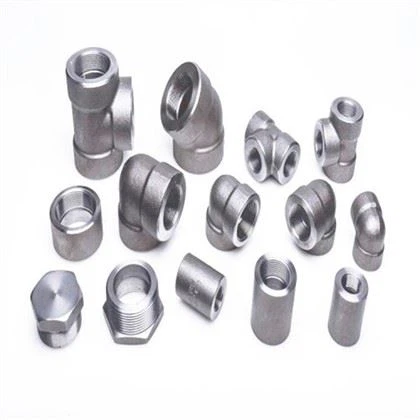
Threaded and Socket Weld Steel Fitting
Threaded and Socket Weld Steel Fitting, also known as Screwed and Socket Weld Steel Fitting can resist corrosion from caustic chemicals, corrosive fluids, oils, and gases, and withstand pressure and Add to Inquiry -
Pipeline Steel Flange
Pipeline Steel Flanges are used to connect valves, pipes, pumps and other equipment to make a pipework system. and two flanges are connected together by bolting them with gaskets to provide a seal Add to Inquiry



How Steel Pipe is Made
From the initial melting of raw materials to the final molding or welding, steel pipes are created through two primary processes:
Converting Raw Steel into a Usable Form
Irrespective of the process, the journey begins with the production of high-quality steel. Foundries melt raw materials in furnaces to produce raw steel. To achieve the desired composition, elements may be added, or impurities removed from the molten metal. The resulting molten steel is then poured into molds to create ingots or transferred to a continuous casting machine to produce slabs, billets, and blooms. Pipes are manufactured from two of these products—slabs and billets.
Steel Slabs and Steel Skelp in Pipe Manufacturing
Steel skelp is produced by heating steel slabs to a scorching 2,200°F. This heating process leads to the formation of scale on the surface, which is removed using a scale breaker and high-pressure cleaning. Once cleaned, the hot steel slab is rolled into thin, narrow strips known as skelp. The skelp undergoes pickling (surface cleaning) with sulfuric acid, followed by a water wash, and is then coiled onto large spools, ready for pipe production. The width of the skelp determines the diameter of the pipe that can be manufactured.
During pipe production, the skelp is uncoiled, heated, and passed through grooved rollers that bend its edges upward, forming a cylindrical tube. A welding process joins and seals the edges together.
Steel Billets for Seamless Pipe
Steel billets, long square pieces of steel, are produced directly from a continuous casting machine or by rolling and stretching cast ingots. These billets are used to manufacture seamless pipes, which are preferred in certain applications due to the absence of a weld line, enhancing their safety.
The solid steel billet is heated to extreme temperatures, reaching a white-hot state without melting. Machines roll them into a cylindrical shape. While still hot, a bullet-shaped piercer creates a consistent hollow center according to the required dimensions. Subsequent milling operations ensure the pipe conforms to the desired specifications.
Finishing Touches
Pipes may undergo straightening before being fitted with end joints. Small-bore pipes typically have threaded joints, while larger ones have flanges welded on. Measuring machines verify the finished pipe's dimensions, and details are stamped on the pipe for quality control.
Quality Control
Quality control uses X-ray inspections to detect defects, especially along welds. Pressure testing, where the pipe is filled with water and held under pressure, helps identify potential weaknesses that could lead to failure.
Specifications of Stainless Steel Pipe
ASTM A--778
A-312
A-358
ASME SA-312
Grades Available: 304,304/L, 316, 316/L, 316/H, 321/H, 317, 317/L, 347/H, 309, 310 Alloys 20, 200, 400, 600, 625, 800, 825, C276, C22, & AL6XN
Pipe Sizes: 1/8" IPS to 36" IPS
Wall Thicknesses: Sch 5, 10S, 10,20, 40S, 40, 60, 80S, 80, 100, 120, 140, 160, & XXH

Different Types of Steel Pipe And Fitting
Stainless and Alloy pipes are used in many applications. we has an extensive range of stainless and alloy Pipes available. Some common industries are food, dairy, petrol, chemical, pharmaceutical, construction, and medical.
Various Piping Options Available
Seamless Pipe When the shell is hollowed out by drawing the billet over a piercing rod, seamless pipework is generated. Because the metal never loses its integrity and the hull is never diminished, piercing the metal through the center eliminates any structural deficiencies.
A Welded Pipe Rolled sheets are welded together to create welded pipes. There are many types of welding technology that make the weld virtually invisible. Most tubes are laser fused or bead-reduced.
Comparing the Two Pipes with no seams may be preferable to corrosive material-laden projects. However, compared to stainless steel tubing, the welding on welded pipes may be more susceptible to corrosive erosion.
Stainless steel pipes that are resistant to corrosion include the following:
• Pressure pipes.
Ferritic or austenitic stainless steel is the most common type of stainless steel used in pressure pipes. They have large diameters and can be welded or seamless to withstand high temperatures.
• Hydraulic line pipes.
These pipes are typically smaller than those used for fuel and hydraulic systems. Austenitic steel is commonly used because of its high tensile strength.
• Sanitary pipes.
Pipes used in the culinary, medical, pharmaceutical, and water treatment industries must meet strict hygienic requirements. Sanitary stainless-steel pipes are simple to maintain and do not rust.
• Mechanical pipes.
To make bearings and other hollow pieces, you need these pipes.
Distinct types of stainless-steel pipes and tubes are available, each well-suited for a particular use. Pipes offer some benefits and drawbacks over tubes.
Chemical properties of Steel Pipe And Fitting
Corrosion resistance: Stainless steel pipe has excellent corrosion resistance and can resist the erosion of most acid, alkali and salt solutions. This is due to the formation of a thin and dense chromium oxide protective film on its surface, which prevents the internal metal from being further oxidized.For example, in an environment containing chloride ions, such as seawater, stainless steel pipe can still maintain good stability.
Oxidation resistance: In a high temperature environment, stainless steel pipe is not easy to be oxidized and can maintain its performance and structural integrity.
Like in high temperature pipes in industrial furnaces, stainless steel pipe can be used for a long time without obvious oxidation phenomenon.
Thermal and electrical conductivity
It has certain thermal and electrical conductivity, but compared with metals such as copper, the thermal and electrical conductivity are slightly worse. However, in some occasions where the requirements for thermal and electrical conductivity are not particularly high, its performance can still meet the demand.
Density
The relative density is higher than that of ordinary carbon steel.
Surface gloss
After treatment, the surface of the stainless steel tube is smooth and has a good appearance.
Production Process of Stainless steel pipe
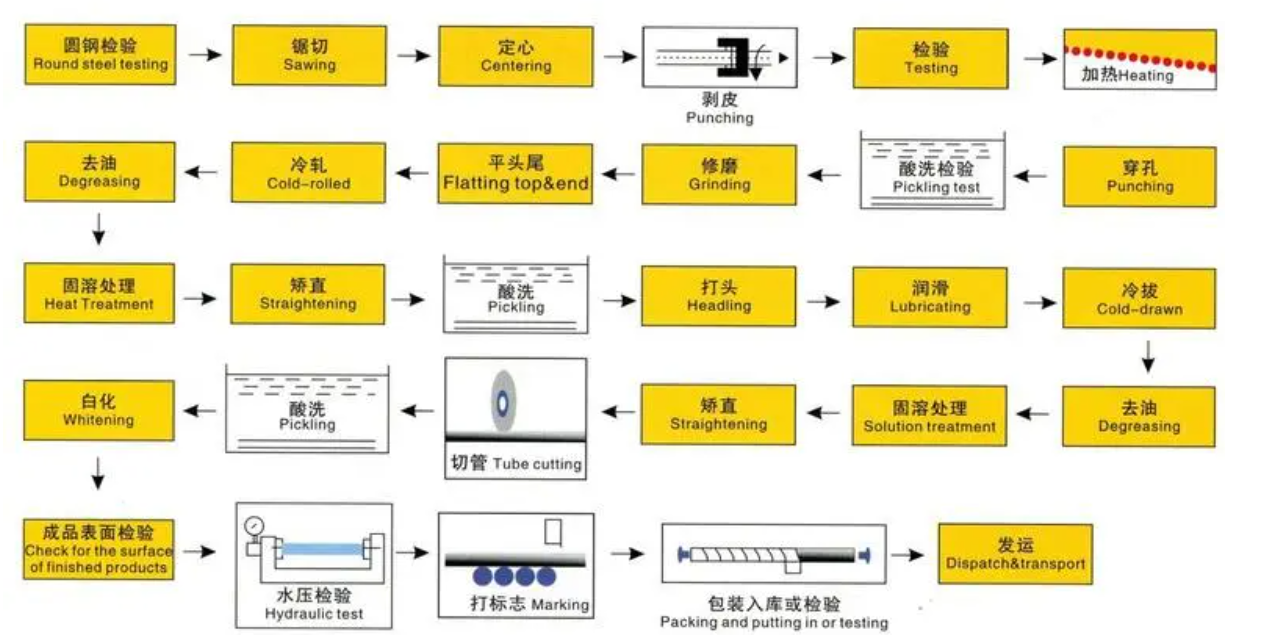
Surface Treatment and Influence of Welded Pipe
The welded pipe is a steel pipe made of steel plate or strip steel after being crimped and welded, generally with a length of 6 meters. The production process of welded steel pipe is simple, the production efficiency is high, there are many varieties and specifications, and the investment in equipment is small, but the general strength is lower than that of seamless pipe. Welded pipes are widely used in construction, furniture, automobiles and other fields. As a kind of metal material, welded pipe has a crucial impact on its quality in the process of its production and manufacturing, the selection and implementation of the surface treatment method.
Surface treatment methods and common techniques
The surface treatment methods of steel are mainly divided into two categories: mechanical treatment and chemical treatment. Among them, mechanical treatment includes grinding wheel polishing, wire drawing, polishing and other methods; chemical treatment includes pickling, electroplating, spraying and other methods. One of the most common surface treatments for welded pipe is galvanizing. In addition, there are some other surface treatment methods, such as painting, spraying and so on.
The effect of surface treatment on the quality of welded pipes
(1) Anti-corrosion performance: The surface treatment method of the welded pipe has a direct impact on its anti-corrosion performance. Galvanized welded pipe has extremely strong corrosion resistance, which can effectively prolong its service life and maintenance cycle; while untreated welded pipe is susceptible to oxidation and corrosion due to its surface, resulting in damage and aging of the material.
(2) Appearance effect: The surface treatment method will also have a certain impact on the appearance effect of the welded pipe. For example, spraying and plastic spraying can decorate the welded pipe with various colors and patterns, so that it can better meet the needs of different environments and scenes.
(3) Processing performance: The surface treatment method will affect the processing performance of the welded pipe. For example, the surface of untreated welded pipes is prone to problems such as burrs and defects, which is very unfavorable for the component manufacturing industry that requires high-precision processing.
Steel Pipe Yield Strength
Yield strength refers to the maximum stress that a steel pipe can withstand under tension or compression before undergoing plastic deformation. In simple terms, when external forces cause the internal stress in the steel pipe to exceed its yield strength, irreversible plastic deformation occurs.(The data is for reference only and does not mean that the strength of all steel pipes is at this value.)
Tensile Strength and Yield Strength Values Common Materials
|
Material |
Tensile Strength(MPa) |
Yield Strength(MPa) |
|
ASTM A53 Seamless and Welded Steel Pipe - Grade A |
331 |
207 |
|
ASTM A53 Seamless and Welded Steel Pipe - Grade B |
414 |
241 |
|
A106 Seamless Carbon Steel Pipe - Grade A |
330 |
205 |
|
A106 Seamless Carbon Steel Pipe - Grade B |
415 |
240 |
|
A106 Seamless Carbon Steel Pipe - Grade C |
485 |
275 |
|
A252 Piling Steel Pipe - Grade 1 |
345 |
207 |
|
A252 Piling Steel Pipe - Grade 2 |
414 |
241 |
|
A252 Piling Steel Pipe - Grade 3 |
455 |
310 |
|
A501 Hot Formed Carbon Steel Structural Tubing - Grade A |
400 |
248 |
|
A501 Hot Formed Carbon Steel Structural Tubing - Grade B |
483 |
345 |
|
A523 Cable Circuit Steel Piping - Grade A |
331 |
207 |
|
A523 Cable Circuit Steel Piping - Grade B |
414 |
241 |
|
A618 Hot-Formed High-Strength Low-Alloy Structural Tubing - Grade Ia & Ib |
483 |
345 |
|
A618 Hot-Formed High-Strength Low-Alloy Structural Tubing - Grade II |
414 |
345 |
|
A618 Hot-Formed High-Strength Low-Alloy Structural Tubing - Grade III |
448 |
345 |
Process of Customizing Steel Pipes and Fittings
Design & Fabrication
At first, we will work with you to understand your unique custom pipe fitting requirements. This process includes understanding your functional and technical documentation requirements. For your selected material, we will use advanced fabrication techniques to achieve your objectives. We can quote AIS domestic made & melted steel or aluminum upon request.
Inspection & Testing
In the inspection & testing phase, we will perform the processes you need to verify the custom pipe fittings meet your specifications. Our highly skilled technicians can perform UT testing, die penetrant, mag particle and radiographic inspections based on your requirements.
Material Reports & Certifications
After inspection & testing, we can prepare any needed material reports & certifications to meet your quality assurance needs. We offer full trace-ability on all products we manufacture.
Delivery & Acceptance
The final step is on-time delivery of your custom pipe fitting order to your specified location. Along with the specified testing, materials and certifications, we await your acceptance of the final product that meets your specific needs.
Our Certifications

FAQ
We're well-known as one of the leading steel pipe and fitting manufacturers and suppliers in China. Please feel free to buy high quality steel pipe and fitting for sale here from our factory. For price consultation, contact us.
metal pipe fittings, ss water pipe fittings, nipple galvanized